Nonviolent protest has long been a defining feature of American democracy, protected not by tradition alone but by the Constitution itself. When U.S. citizens peacefully protest the actions or policies of Immigration and Customs Enforcement (U.S. Immigration and Customs Enforcement, commonly known as ICE), they are exercising rights that sit at the core of the First Amendment. Far from being a legal gray area, such protest is firmly protected under American law—so long as it remains peaceful and lawful.
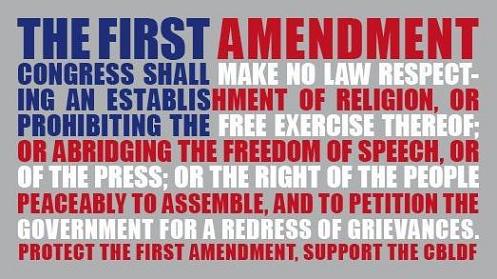
The constitutional foundation for protest begins with the First Amendment, which guarantees freedom of speech, the right of the people to assemble, and the right to petition the government for a redress of grievances. These protections were designed specifically to allow citizens to criticize government action, challenge public policy, and advocate for change without fear of retaliation. Protesting ICE—an agency of the federal government—is a textbook example of petitioning the government over public concerns.
Importantly, the First Amendment does not distinguish between popular and unpopular viewpoints. Courts have repeatedly held that speech critical of government agencies, officials, or policies lies at the “heart” of constitutional protection. Immigration enforcement is a matter of public policy established by Congress and implemented by the executive branch. Citizens therefore have not only the right, but the constitutional standing, to protest how that authority is exercised.
Nonviolent protest can take many lawful forms: marches, rallies, vigils, picketing, chanting, holding signs, boycotts, and public speeches. Citizens may protest outside ICE facilities, in public streets and parks, or on sidewalks—so long as they comply with reasonable time, place, and manner restrictions. These rules, such as permit requirements or limits on blocking traffic, are allowed only if they are content-neutral and narrowly tailored to serve public safety, not to suppress dissent.
The legality of protest does not depend on agreement with its message. Courts have consistently rejected attempts by governments to silence demonstrations simply because they are controversial or disruptive to public comfort. The Supreme Court has made clear that protest speech is often intended to challenge, provoke, or discomfort—and that such effects do not strip it of constitutional protection.
Crucially, protesting ICE does not interfere with the agency’s lawful authority so long as demonstrators do not obstruct operations, trespass on restricted property, or engage in threats or violence. Peaceful protest is distinct from interference. Chanting outside a detention facility, criticizing enforcement practices, or demanding policy changes does not prevent ICE from carrying out its legal duties; it simply expresses opposition to how those duties are performed.
This distinction matters because some critics claim that protesting law enforcement agencies is inherently unlawful or “anti-rule-of-law.” In fact, the opposite is true. The rule of law depends on the ability of citizens to question government conduct without intimidation. Law enforcement agencies, like all arms of the state, are accountable to the public. Protest is one of the mechanisms by which that accountability is expressed.
History reinforces this principle. Civil rights marches, anti–Vietnam War protests, labor demonstrations, and women’s rights rallies were all directed at government action—and all faced claims that they were improper or dangerous. Yet courts repeatedly affirmed that peaceful protest is not only legal, but essential to democratic governance.
It is also worth emphasizing what protest is not. The Constitution does not protect violence, vandalism, or intimidation. Blocking emergency access, damaging property, threatening officers, or physically interfering with arrests falls outside First Amendment protection and can lawfully be penalized. The legality of protesting ICE hinges on nonviolence and respect for lawful boundaries—not on the content of the message.
Ultimately, it is legal for U.S. citizens to nonviolently protest ICE because the Constitution was designed to protect dissent against government power. Peaceful protest does not weaken democracy; it sustains it. By allowing citizens to challenge even the most contentious government policies in public view, the First Amendment ensures that law enforcement authority operates under scrutiny, debate, and the consent of the governed.