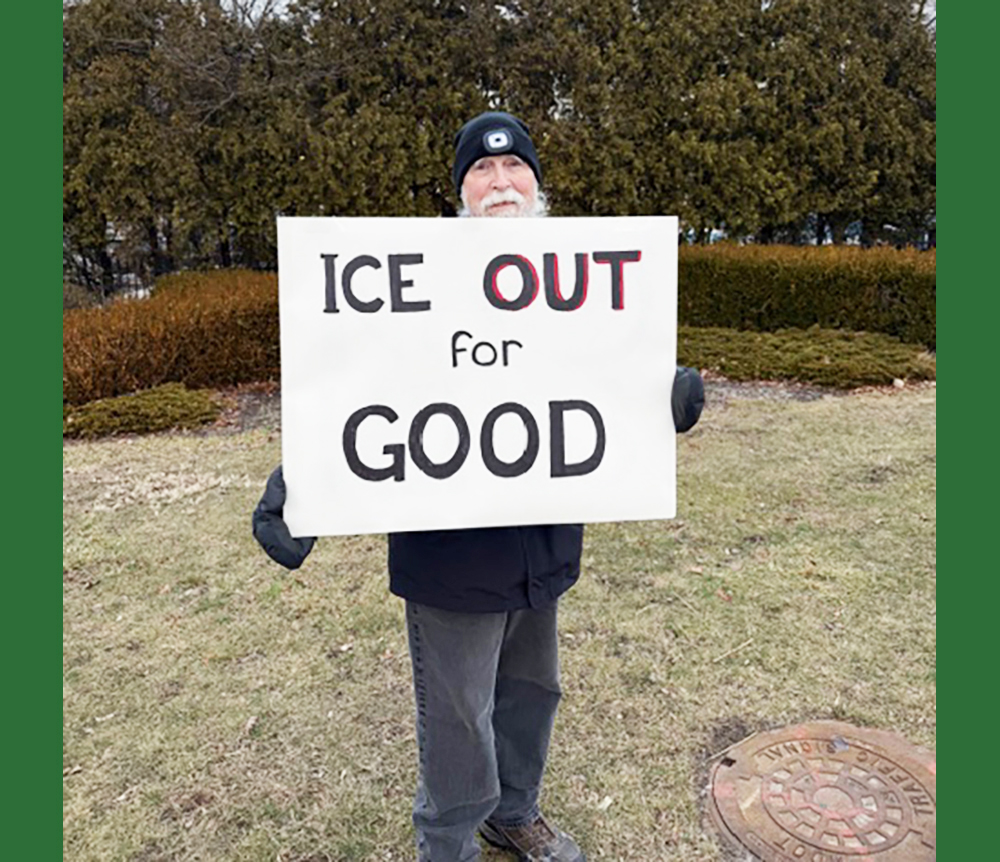
A Guide to Participating in Protests About Immigration Enforcement (Know Your Rights & Stay Safe).
Public protest is a long-standing form of political expression in the United States and is generally protected by the First Amendment, which safeguards freedom of speech and peaceful assembly. At the same time, laws governing protests, surveillance, and immigration enforcement are evolving quickly under the Trump administration. The Dept. of Homeland Security is trying to intimidate citizens.
Uunderstanding your rights and responsibilities is important before attending a demonstration.
ICE is scanning license plates, using bio-metric scans, and adding as much information to a federal database of “domestic terrorists” as it can. That information, according to reports, is being shared and cross-referenced with other databases such as Social Security, Medicare, Medicaid, etc. Border czar Tom Homan said this week that his department reserves the right to inform employers of our protest activities.
It is an intimidation festival.
Advice: It’s best to not show your car or use your car, and it is recommended to wear masks, same as ICE, to thwart biometric scanning. We have a right to protest government anonymously.
Understand Your Legal Rights
In most circumstances, people in the U.S. have the right to protest peacefully in public spaces such as sidewalks, parks, and plazas. However, authorities can impose “time, place, and manner” restrictions, meaning protests cannot block emergency services, create safety hazards, or occur in restricted locations.
Recent legal disputes have also involved protests around federal immigration facilities. For example, a 2025 federal rule expanded the government’s authority to restrict demonstrations in areas surrounding federal sites used by agencies such as immigration enforcement.
Courts continue to weigh how these rules interact with constitutional protections, and litigation over protest restrictions is ongoing.
Be Aware of Surveillance and Technology
Modern protests often occur in environments where surveillance tools are widely used. Law enforcement agencies have increasingly deployed technologies such as drones, cameras, and facial recognition systems in public-safety operations.
Digital-rights advocates note that these tools can affect privacy and may create a “chilling effect” on free speech if people fear being monitored while demonstrating.
Because surveillance practices vary by jurisdiction, it’s useful to understand local policies and the broader debate around civil liberties and technology.
3. Know the Current Legal Landscape
Several court decisions and legal disputes in recent years have shaped the environment surrounding protest and immigration enforcement:
- In one appeals case reported in 2026, a federal court ruled that individuals in immigration proceedings may need to complete those proceedings before challenging certain constitutional claims in federal court.
- Courts have also been examining how immigration enforcement actions interact with constitutional protections such as the Fourth Amendment and due process, especially in cases involving arrests and identification practices.
- Separate rulings have addressed allegations that immigration enforcement policies targeting activists could violate the First Amendment, illustrating the ongoing legal debate around political expression and immigration policy.
These cases show that the boundaries between immigration enforcement and free-speech protections are still being defined.
4. Protect Your Digital Privacy
If you attend a protest, think about how your digital footprint might affect your privacy and safety.
Helpful precautions include:
- Review privacy settings on social media accounts.
- Avoid posting information that could unintentionally reveal other participants’ identities or locations.
- Be mindful of photos or videos that include people who did not consent to being recorded.
- Remember that public posts can sometimes be used in legal proceedings or investigations.
Digital-rights groups often recommend thinking carefully before sharing real-time location information or identifiable details about others.
5. Prepare Before Attending
Practical preparation can make demonstrations safer and more effective:
- Attend with trusted friends or community groups.
- Bring water, weather-appropriate clothing, and necessary medications.
- Keep emergency contact information accessible.
- Understand local protest laws and police procedures in your area.
If you’re unsure about your rights, civil-liberties organizations frequently publish “Know Your Rights” guides tailored to protests and public demonstrations.
6. Focus on Peaceful Participation
Peaceful protest tends to be the most effective way to ensure demonstrations remain lawful and maintain public support. Avoid confrontations, follow lawful instructions from authorities, and prioritize the safety of everyone present.